MySignalForge
Bank Rakyat Personal Loan: Public vs Private Financing-i & Rate Checks
Choose the relevant Bank Rakyat Personal Financing-i route, then compare fixed or floating rates, payment methods, takaful, documents and settlement.

Share
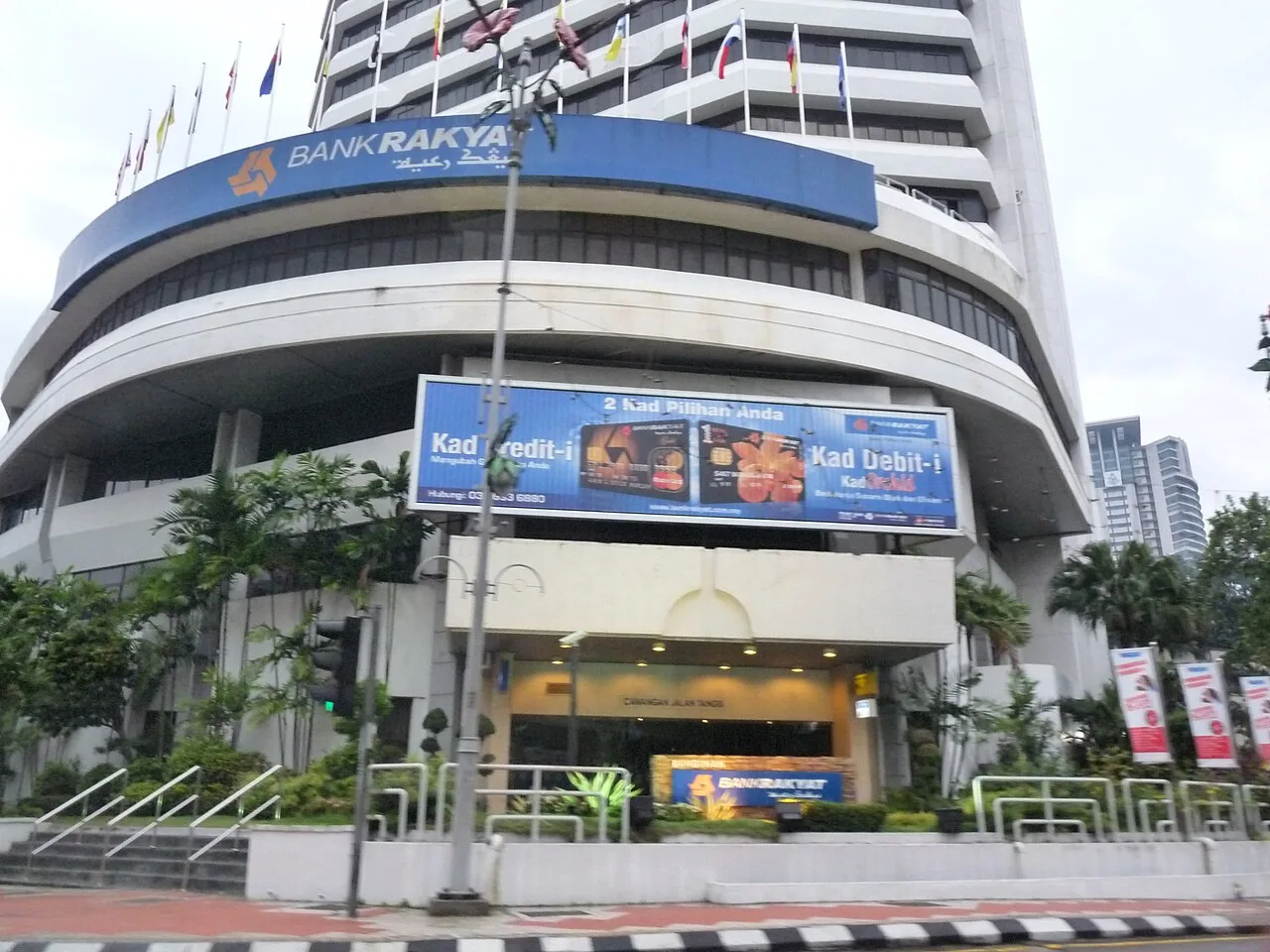 Former Bank Rakyat building, Jalan Tangsi, Kuala Lumpur (2013). Resized and converted to WebP; displayed crop.Photo by Khairul hazim · Wikimedia Commons · CC BY-SA 4.0
On this page5 sections
A search for “Bank Rakyat personal loan” can refer to several Personal Financing-i products. Start by identifying the employment category, repayment method and fixed or floating profit-rate basis. A headline rate for another category is not an offer available to every applicant.
This independent guide compares the public- and private-sector entry routes using Bank Rakyat’s product information and documents accessed on 25 October 2026. The bank’s product-page and PDS links used for this comparison returned 404 when rechecked on 17 November 2026. Use the Bank Rakyat product menu and ask the bank for its current terms before relying on the figures below. This is not a bank application or an eligibility decision. The Islamic personal-financing guide explains the wider contract and rate terminology.
Public sector or private sector: which page applies?
| Initial check | Public-sector route | Private-sector route |
|---|---|---|
| Employment category | Public sector, GLCs and GLC subsidiaries as listed by the bank | Listed employer categories including companies, cooperatives, legal firms and NGOs |
| Published income entry condition | Fixed monthly income including fixed allowances of at least RM1,600 | Gross income including fixed allowances of at least RM2,000 for permanent employees; RM8,000 for contract employees |
| Other conditions to check | Service period and age at financing maturity | Employer classification, employment status, age at maturity and new versus overlap application |
| Rate structure presented | Fixed and floating options | Floating-rate pricing by repayment method and tenure |
These conditions appeared on the bank’s public- and private-sector product pages when this guide was prepared. Those direct pages are currently unavailable. The bank’s Personal Financing-i menu still lists both routes. Confirm the current entry conditions with the bank. The previously published maximum of RM400,000 and ten years did not imply that every applicant would qualify for either amount or term.
Ask the bank which category it assigns to your employer. Do not decide solely from how an employer’s name sounds or infer that the product maximum is your own eligibility.
Why the payment method changes the comparison
The private-sector page separates salary deduction or transfer arrangements from ordinary electronic payment. It also ties rate and tenure to employer classification and distinguishes some new and overlap applications. That means two people with the same income can still be looking at different published rows.
Before comparing prices, write down the exact product, employer category, new/overlap status, payment arrangement, amount, term and takaful choice. Ask for the corresponding offer and payment schedule. A screenshot of one rate row without these conditions is not enough for a like-for-like comparison.
Fixed profit and floating profit need different checks
Bank Rakyat previously published separate fixed- and floating-rate PDS documents. The floating PDS dated 1 December 2025 described monthly reducing-balance financing linked to SBR and warned that instalments may rise when SBR rises. Its direct link returned 404 when checked on 17 November 2026, so request the current PDS from the bank before choosing a product.
The December 2025 PDS illustration showed RM100,000 over ten years: RM1,080.31 monthly at an assumed 5.40%, RM1,130.40 after a one-percentage-point increase, and RM1,181.81 after a two-point increase. These historical illustration figures are neither a current offer nor a forecast.
Compare the effective profit rate and reference-rate mechanism, not just a fixed-rate headline against an SBR spread. Our personal-loan calculator can explain a constant-rate monthly repayment; it does not reproduce every Financing-i contract or future SBR change.
Takaful and deductions: compare cash as well as rate
The private-sector page describes takaful as optional but publishes a pricing adjustment for financing without it. Ask for both the protection cost and financing terms rather than assuming that removing cover necessarily lowers total cost.
Separate the approved financing amount from money released after applicable charges or settlement of previous facilities. Record the actual net disbursement and all required payments using the personal-loan comparison worksheet. Do not turn a maximum financing limit into a household budget.
Documents and early settlement
Use the bank’s checklist for the selected route and application type. Collect the requested identity, salary, account and employment evidence, preserving any alternatives in the list. Our application guide explains how to separate required combinations from either/or evidence.
For early settlement, the floating-rate PDS provides for ibra’ on deferred profit and a calculation using the outstanding selling price and other applicable amounts. Request a dated statement rather than treating either the selling price or a generic calculator balance as the final amount due.
My reading is that choosing the correct product row comes before comparing percentages. The bank’s employment and payment categories change what is being priced; overlooking them can make a mathematically accurate comparison answer the wrong borrowing question.
For another bank’s method, read the CIMB Cash Plus guide. If this financing would replace several debts, use the consolidation checklist before applying. Return to the Malaysia loan pillar for other borrowing purposes.
Share
Keep exploring