MySignalForge
Employee Expense Claims and e-Invoices: 5 Receipts to Check
When an employee pays for fuel, parking, tolls, meals or overseas travel on the company's behalf, follow IRBM Specific Guideline v4.9 Section 7 to collect and retain the right evidence.

Share
On this page10 sections
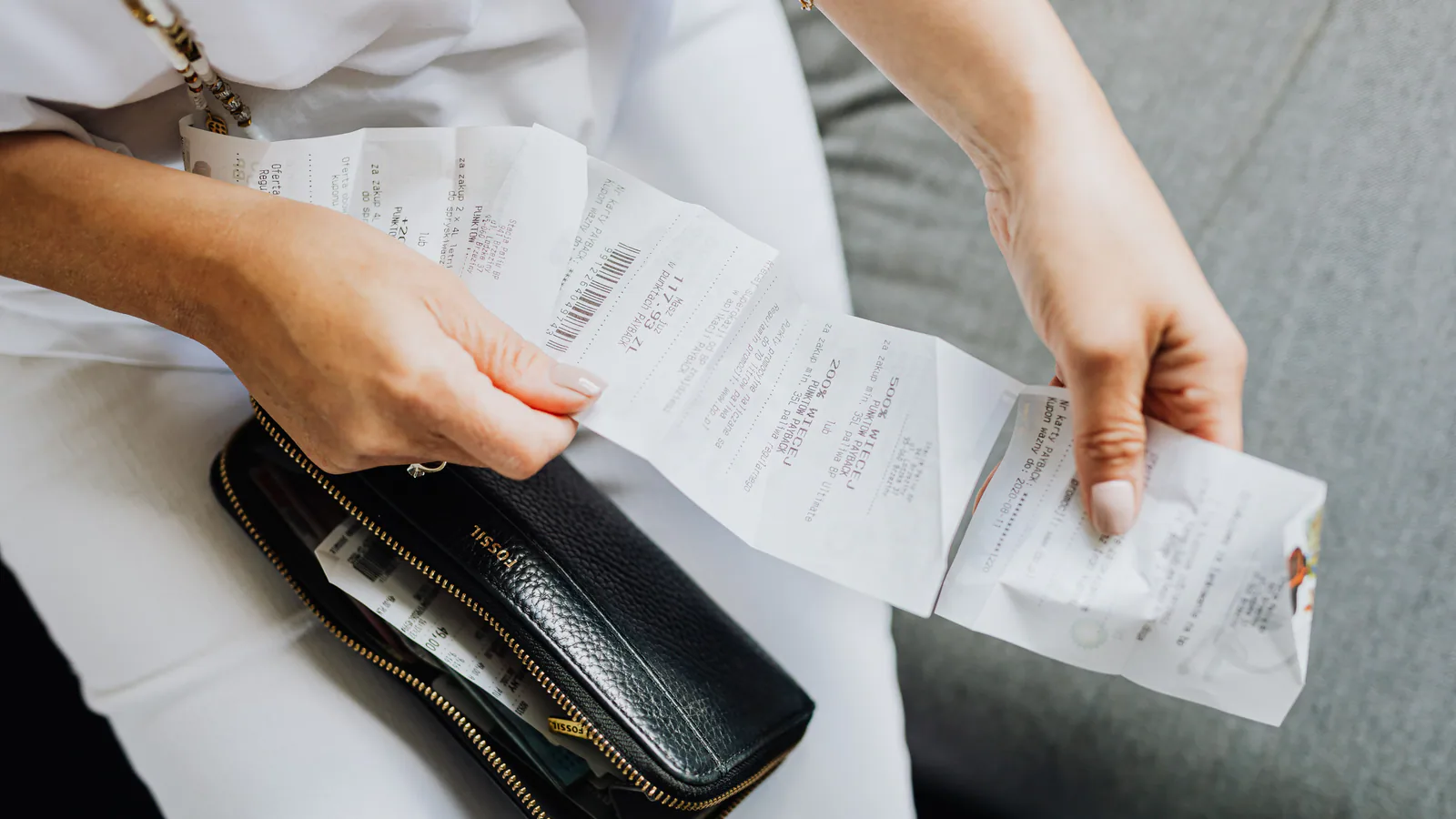
Spread out an ordinary sales employee’s expense claim and you may find several kinds of evidence. The employee travelled from Subang to Klang to meet a customer, spent RM100 on fuel and RM20 on parking, then paid RM250 for a client dinner. Back at work, they submit a paper fuel-station receipt, a Touch ‘n Go transaction record and a validated restaurant e-Invoice in their own name. Finance must decide what can be accepted, what needs more evidence and whether the company should issue a self-billed e-Invoice.
Section 7 of the IRBM e-Invoice Specific Guideline v4.9 gives the order: first ask whether the supplier can issue the e-Invoice to the employer; if so, give the employer’s buyer details. If that is not possible, an employee-named e-Invoice—and, for the relevant transactions, existing supporting documents—can help evidence the expense.
The concession has a condition: the employer must be able to show that the employee incurred the expense on the employer’s behalf. It does not turn every personal receipt into an automatically deductible company cost.
- Follow the four-step claim sequence
- Sort evidence for five common expenses
- Use existing receipts and employee-named documents correctly
- Work through the complete example
- Write a claim policy that distinguishes two types of spending
- Keep payment methods and overseas spending separate
- Complete the finance check
Follow the four-step claim sequence
Section 7.6 of v4.9 sets out a practical sequence for an employee’s expense claim:
- Ask the supplier whether an e-Invoice can be issued to the employer as buyer.
- If it can, supply the employer’s buyer details.
- If it cannot, give the employee’s personal details so an e-Invoice can be issued to the employee.
- Submit the validated e-Invoice with the expense claim to the employer.
Section 7.4 also permits an employee-named e-Invoice or existing supporting documents for the transactions concerned. Section 7.5 requires the employer to demonstrate that the employee acted on its behalf. Finance should therefore connect the buyer name, business purpose, approval, payment and underlying purchase instead of approving a claim from the invoice header alone.
| Document finance receives | Next check |
|---|---|
| Validated e-Invoice in the company’s name | Match it with the claim, payment and business purpose |
| Validated e-Invoice in the employee’s name | Establish that the employee spent on the employer’s behalf, then review under company policy |
| Paper receipt, bill, app record or payment slip | Retain the original and support the employee-to-employer connection |
| Only a card debit, with no supplier record | Ask for a document that explains what was actually bought |
Sort evidence for five common expenses

IRBM does not prescribe a different daily claim form for every expense type. Start with the same supplier-document sequence, then add evidence appropriate to the transaction.
| Expense | Supplier evidence to seek first | Internal context that may complete the record |
|---|---|---|
| Fuel | Company- or employee-named e-Invoice, station receipt | Travel date, place, customer or work purpose |
| Parking | e-Invoice, machine receipt, app record | Visited location, time and work arrangement |
| Tolls | e-Invoice, e-wallet or card transaction | Route, date and business trip record |
| Client meal | e-Invoice, restaurant bill, payment record | Participants, business purpose and approver |
| Overseas travel | Foreign bill, receipt or invoice and payment record | Itinerary, trip approval and exchange-rate record |
This is a document-management suggestion, not a new mandatory IRBM table. Income-tax deductibility still depends on the nature of the expense, applicable tax law and the company’s facts. A restaurant e-Invoice alone does not establish a deductible percentage.
Use existing receipts and employee-named documents correctly
Section 7.4(a) of v4.9 allows a business to use an e-Invoice in the employee’s name or existing supporting documentation as expense evidence for relevant transactions. Section 7.2 gives examples of supporting documents: bills, receipts, invoices, statements and payment slips.
That treatment is not a reason to stop asking for an employer-named e-Invoice. Section 7.3 says employees should request one where possible. A claim policy can make the order clear: try the company buyer details first; when that cannot be done, record why and submit the employee document or other support.
Supplier implementation status can matter. In Example 13 of v4.9, a stallholder not yet required to issue e-Invoices gives an employee a handwritten receipt for refreshments bought for a client meeting. The business is neither required nor permitted to issue a self-billed e-Invoice for that purchase; it can use the stallholder’s receipt as evidence. The example is about that transaction, not a general licence to self-bill all petty cash purchases.
An overseas employee reimbursement has a specific exception
Section 7.4(b) says that where an employee pays expenses incurred overseas on the employer’s behalf, neither employer nor employee needs to issue a self-billed e-Invoice for that reimbursement. IRBM accepts foreign bills, receipts, invoices or other existing supporting documents as expense evidence.
This is about an employee’s overseas expense on behalf of the company. A company buying a service directly from a foreign supplier, such as paying a foreign advertising platform from its own business account, may instead need the rules for imported transactions and self-billing. Do not combine the two fact patterns. The Meta and Google Ads guide discusses the separate advertising purchase.
An imperfect buyer name is not permission to self-bill
An employee bringing back a document without the company’s name does not automatically entitle the company to create an e-Invoice on the supplier’s behalf. Self-billing applies to the transaction types listed in Section 8.3 of v4.9. Reimbursing the employee internally is not, by itself, an employee selling a service to the company.
If the original purchase independently falls within another self-billed category—such as a direct purchase from a foreign supplier—assess that transaction under its own rule. Self-billing merely to repair an awkward receipt can put supplier, buyer and actual transaction out of alignment.
Work through one complete claim

Return to the sales employee travelling from Subang to Klang. The three costs and available documents are:
| Cost | Amount | Existing evidence |
|---|---|---|
| Fuel | RM100 | Paper station receipt and card debit |
| Parking | RM20 | Parking-app transaction |
| Client meal | RM250 | Validated e-Invoice in the employee’s name |
Finance first establishes that the trip was on the company’s behalf. The customer appointment, manager approval, claim form and route explain why the employee travelled from Subang to Klang. It is premature to decide tax deductibility from the receipts alone.
Next, review each supplier record. The fuel receipt should identify date, place, amount and goods; the card entry supports payment. The parking app should show place and time. Section 7.4(a) can allow the employee-named restaurant e-Invoice to support the cost when the relevant conditions are met.
Then reconcile the numbers. RM100 + RM20 + RM250 = RM370. The claim, payments and ledger classification should return to that total. If the restaurant later refunds RM30, retain the refund record and adjust the actual claim to RM340.
Finally, record approval: the manager confirms the meeting and work purpose, finance checks documents, and the company reimburses the employee. That internal RM340 payment is not itself a purchase of services from the employee, so it is not a reason to issue a separate self-billed e-Invoice to them.
The amounts are hypothetical. They illustrate the Section 7 document sequence, not a real client case.
| If a condition changes | Finance should |
|---|---|
| Restaurant can issue to the company | Have the employee give company buyer details when buying and obtain that document first |
| Meeting claimed, but no appointment or approval exists | Obtain the business basis before deciding whether to accept the claim |
| Card debit exists, fuel receipt is missing | Seek evidence of the purchase; the debit alone does not describe the goods |
| Expense occurred on a Singapore work trip | Keep foreign documents, trip purpose and exchange-rate record |
| Company bought directly from a foreign platform | Move to the cross-border procurement rules rather than treating it as overseas staff reimbursement |
Write a policy that distinguishes two types of spending
The guideline treats employment perquisites and benefits in Section 6 and expenses incurred on the employer’s behalf in Section 7. The paperwork can look similar while the reason for company approval differs.
| Type | Example | What a policy should clarify |
|---|---|---|
| Employment benefit or perquisite | Allowance, membership, employee’s personal utilities or parking benefit | Eligible employees, limits, approval and required documents |
| Employee spending on behalf of employer | Client-visit transport, project lodging, business meal | Assignment, date, place, approval and original supplier record |
Section 6.5 specifically requires the relevant employment benefit to be clearly stated in the employer’s policy for that concession. Section 7.5 instead requires proof that the employee spent on the employer’s behalf. A company can cover both in one policy, but its approval fields should let finance tell which situation it is handling.
A useful internal policy could answer where employees find buyer details, which expenses need prior approval, what to record if an employer-named document cannot be obtained, what a paper or app record must show, how an overseas amount is converted internally, when source documents are submitted, and how duplicates, refunds and lost receipts are handled. Those are management suggestions. The IRBM guideline does not impose one universal claim form or set every company expense limit.
Keep payment methods and overseas spending separate
The payment instrument changes what evidence is available; it does not, on its own, decide e-Invoice responsibility.
If an employee pays on a personal credit card and is reimbursed, connect supplier document, relevant card debit and the company’s reimbursement. There is no need to leave the full personal card number in a widely shared claim file; keep enough to identify the transaction and conceal unrelated digits.
If a company card pays directly, the bank debit comes from the company, but the employee still needs supplier evidence and a work purpose. A company card proves company payment, not that the item was necessarily for business.
If the employee operates a company advertising account and its invoice comes from a foreign platform, identify the actual buyer. A direct company purchase through the employee’s access may enter the cross-border self-billing analysis. A temporary local transport or lodging purchase by an employee on an overseas work trip is the separate Section 7.4(b) situation.
Keep the exchange-rate trail
A foreign receipt can be in SGD or USD while the card posts in RM. Retain the original-currency price, bank-converted amount, fee and accounting exchange rate chosen by the company. They answer different reconciliation questions; the final RM card debit alone may not let finance reproduce the entry. If an applicable law prescribes a rate, follow that law. This record suggestion is only to make the calculation traceable.
Complete the finance check
- Was the supplier asked whether the e-Invoice could be made out to the company?
- Is the document in the company or employee name, and why?
- Is there an approval or work assignment showing the employee acted for the company?
- Do date, amount, location and business purpose match the claim?
- Can the payment be traced to the supplier record?
- For an overseas expense, are the foreign document and exchange-rate records kept?
- Does company policy explain what to submit when company buyer details could not be used?
Validation in MyInvois establishes the e-Invoice’s status, not on its own the work purpose or deductibility. Keep enough records to connect the spending to the employee’s action on the employer’s behalf.
My practical approach is to check a claim at two times. Before spending, make the company’s buyer details available to the employee. When the claim arrives, check the trip and purpose against the supplier document. This is an internal workflow inference from Section 7, not an IRBM-prescribed reimbursement process. Waiting until month-end may leave finance unable to identify why the employee went from Subang to Klang or who attended the RM250 meal. Recording it promptly reduces a later chase for explanations; deductibility remains subject to applicable tax law and actual facts.
The company name, TIN and registration number can sit in a controlled employee reference so staff can retrieve them at a station or restaurant rather than relying on the accountant’s computer. That is an implementation suggestion grounded in the order of Sections 7.3–7.6.
Related guides: Malaysia e-Invoice overview, SME checklist, expense classification and foreign advertising payments.
Share
Keep exploring