MySignalForge
Malaysia Self-Billed e-Invoice: Foreign Software, Employee Claims and Disbursements
See who issues a Malaysia e-Invoice for foreign software, employee claims, client disbursements and personal second-hand purchases. Includes a worked RM4,000 example.

Share

The day before month-end, finance has four expenses on its desk. The company bought a software subscription directly from an overseas vendor. An employee has submitted a travel claim. An event company’s payment request includes flower costs it paid for its client. Another file records the company buying an old camera from an individual.
All four payments may leave a company bank account and appear as expenses in accounting software. That does not make all four self-billed e-Invoices. Employee claims have a separate treatment; the event company’s recovery of flower costs depends in part on whom the florist invoiced; and the individual seller’s business status matters.
The useful first step is to identify supplier, buyer, payer and final cost bearer before selecting a MyInvois document. The IRBM Specific Guideline v4.9 gives distinct rules for these fact patterns. MyInvois can validate submitted fields; it cannot read the contract and determine whether someone paid on behalf of another party.
- Map the four transaction roles
- Distinguish ordinary, self-billed and consolidated e-Invoices
- Check the nine self-billing categories
- Route a foreign purchase
- Separate disbursement from reimbursement
- Apply the employee-expense treatment
- Identify platform and agent roles
- Run the four month-end examples
- Check the 72-hour cancellation window
- Build a document trail before submission
Write down four roles before opening MyInvois

| Role | Question | Evidence to inspect |
|---|---|---|
| Actual supplier | Who provided the goods, service or asset? | Contract, order, delivery record |
| Actual buyer | Who acquired it under the transaction? | Contract and original e-Invoice name |
| Payer | Who transferred the money? | Bank or card record |
| Final cost bearer | Whose books ultimately carry the expense? | Claim, ledger and agreement to pay on behalf |
These roles need not belong to four different people. An employee who uses a personal card for a company hotel may be the payer while the employer bears the business expense. An event organiser may pay a florist for its client; the buyer named on the florist’s e-Invoice helps determine how the organiser recovers that money.
A short role map at purchase approval is more reliable than asking the person uploading to MyInvois to infer the transaction from a bank line after payment.
Standard, self-billed and consolidated answer different questions
| Route | Who issues it? | What it generally records |
|---|---|---|
| Ordinary e-Invoice | Supplier | Supplier’s sale and buyer’s purchase evidence |
| Self-billed e-Invoice | The party assigned the issuing role in a specified case | A transaction in which the usual supplier does not issue the e-Invoice |
| Consolidated e-Invoice | Supplier | Eligible sales where buyers did not require individual documents |
These are useful routes, not an exhaustive list of MyInvois document types. Credit Notes, Debit Notes and Refund Notes address later adjustments. Consolidating a supplier’s sales is not a substitute for self-billing a qualifying purchase, and a finance team cannot choose self-billing simply because a supplier failed to send an invoice. The IRBM General FAQ, questions 27–28 explicitly limits self-billing to section 8.3 circumstances.
For a sale with no buyer request, also check the ordinary consolidation restrictions and any applicable section 16 interim-relaxation period. See the monthly consolidation guide.
Section 8.3 is the self-billing entry point
The Specific Guideline lists nine broad groups. This table is a triage tool; the relevant section and actual agreement decide the details.
| Group | Party to check for the self-billing role | Further question |
|---|---|---|
| Payments to agents, dealers or distributors | Paying taxpayer | Is this truly an agency-type payment under section 9? |
| Goods or services from a foreign supplier | Malaysian buyer | What was imported, and when did the triggering event occur? |
| Profit distributions, including dividends | Distributing entity | Does the distribution and any exception fit section 11? |
| E-commerce transactions | Platform or intermediary in the specified role | Who sold, settled and charged a platform fee? |
| Betting and gaming winner payouts | Licensed operator | Does a stated deferred category apply? |
| Transactions with an individual not carrying on a business | Buyer or transacting party | Is the individual carrying on a business, and does another self-billing category apply first? |
| Interest payments | Paying taxpayer in the specified cases | Does a section 8.3(g) exception apply? |
| Insurance claims, compensation or benefit payments | Insurer | Is this the covered insurance-business payment? |
| Capital reduction, redemption, share buy-back, return of capital or liquidation proceeds | Investee or paying entity | What approval and completion event governs the payment? |
The categories are not permission to pick the “closest” label for a missing local supplier invoice. A seller carrying on business remains a seller even if it has not reached a mandatory date or qualifies for an exemption; the buyer must not invent self-billing outside the specified cases.
For a foreign purchase, identify the direction and the clock
A Malaysian company buying software, advertising, consulting or goods directly from a foreign supplier generally examines section 10’s self-billing route. Keep the foreign bill, contract, payment, service period and any import or customs records. Goods and services can have different issuance timing, so do not use one generic “foreign purchase due date” for both.
Where a foreign supplier’s TIN is unavailable, the guideline allows general TIN EI00000000030 in the applicable seller field. The foreign-buyer general TIN EI00000000020 belongs to the opposite direction, such as a Malaysian seller invoicing an overseas customer without a TIN. Neither code removes the need to identify the actual counterparty and transaction.
For imported services, use the earlier of the payment date and the date you receive the foreign supplier’s invoice, as determined under the rules for imported taxable services. Issue the self-billed e-Invoice by the end of the following month. Imported goods follow a separate timetable. IRBM Specific Guideline v4.9, sections 10.4.8–10.4.9
Imported goods also involve customs and logistics records. A self-billed e-Invoice does not replace K1 or another required customs form. The K1 import and self-billing guide goes through that record set.
Read the original third-party invoice before recovering a cost
Section 5 of the Specific Guideline gives two examples. A florist issues an RM4,000 e-Invoice directly to the client. The event planner pays on the client’s behalf and recovers RM4,000 with proof of payment. In the other example, a hotel issues an RM30,000 banquet hall e-Invoice to the planner. The planner bills the client for the hall and its service on separate lines. IRBM Specific Guideline v4.9, examples 8 and 10
Using this article’s illustrative RM500 planning fee, the hall makes up RM30,000 ÷ RM30,500 ≈ 98.4% of the planner’s invoice in the hotel example. Track that third-party cost separately if you use invoice totals to measure how much the business charges for planning.
The diagram holds the florist charge and planning fee constant and changes who actually buys the flowers. The florist invoices the buyer under each arrangement.
Florist invoices the client directly
Florist invoices the event planner
RM4,500 − RM500 = RM4,000. The planner pays and recovers the same florist cost in both scenarios. The difference is the amount the planner invoices and the document the client uses to verify the flower charge. Revenue recognition and tax treatment depend on the underlying transaction.
Confirm who buys the flowers before placing the order or paying a deposit. At month-end, a mismatch between the contract, purchase order and invoice name can send finance back to the event team and the florist to check whether the invoice needs correcting.
An employee's expense claim has a separate treatment
An employee paying for parking, accommodation or communications on company business is not automatically a foreign-supplier or non-business-individual self-billing case. Under section 7, staff should seek an e-Invoice in the employer’s name where feasible. Where that cannot be obtained, the guideline permits use of an e-Invoice in the employee’s name or existing supporting documents for the relevant expense. Overseas employee spending has its own concession; an employer does not issue a self-billed e-Invoice merely because the employee claims the cost.
The employer needs evidence that the employee incurred the expense on its behalf. For the guideline’s perquisite or benefit concession, the benefit must be clearly stated in employer policy. Keep the claim form, business purpose, date, supplier, amount and approval; a card-payment screenshot alone does not explain the business connection.
Platform settlement and agency payment are not one document
An e-commerce platform may show the customer checkout, collect payment, charge the merchant a platform fee and issue a self-billed document for merchant income under section 14. Each leg has a different supplier and buyer. Start with the legal parties and the platform’s actual documents, not the net amount paid to the merchant. The e-commerce seller guide and TikTok Shop document guide show that separation.
For an agent, dealer or distributor, read the contract and the nature of the payment. A commission, incentive, rebate and ordinary purchase price are not necessarily the same transaction. Labelling a general invoice line “commission” does not establish the section 9 self-billing relationship.
Route the four month-end files separately
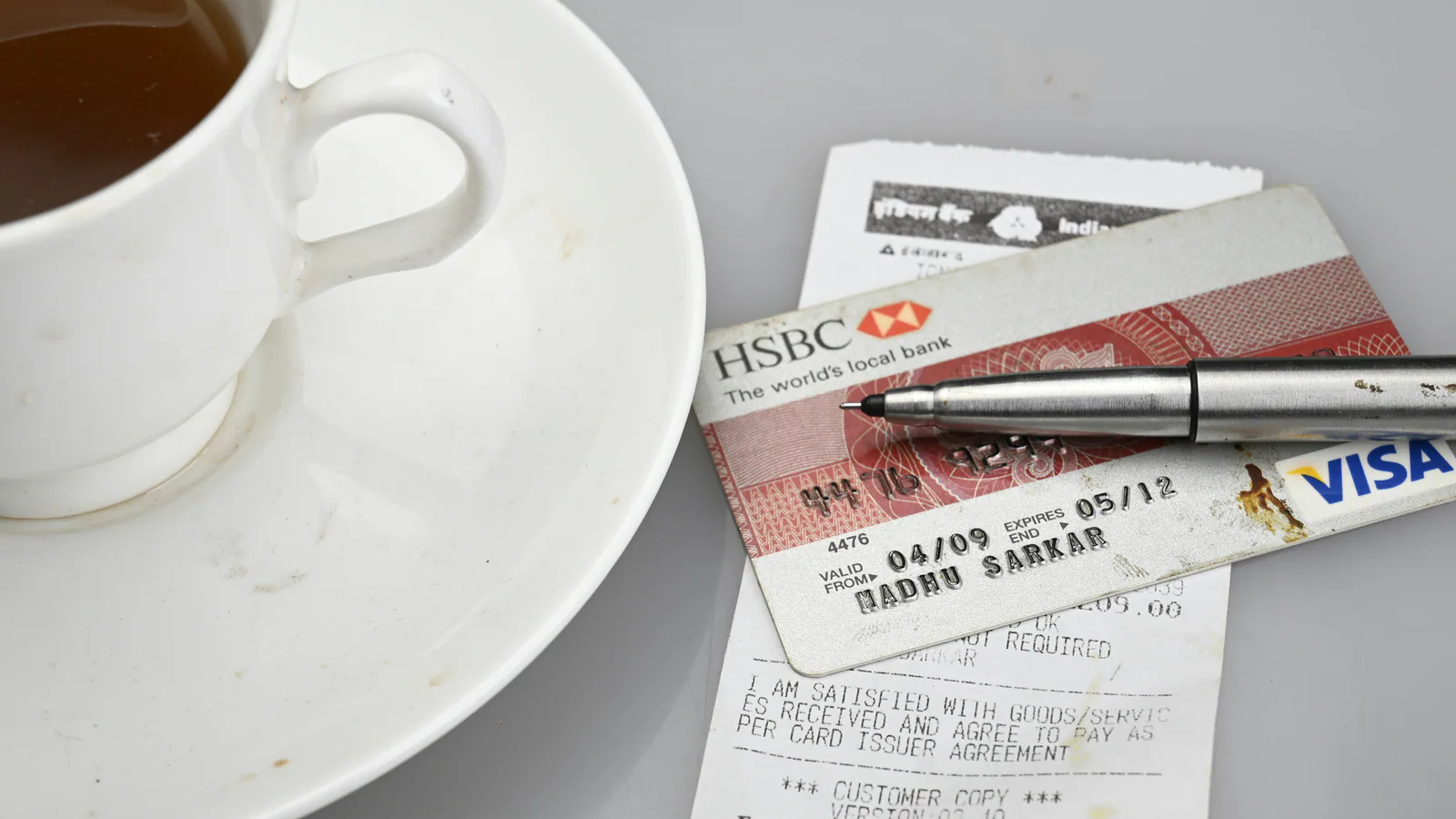
The amounts below are illustrative cases based on the original article, not the author’s actual company ledger.
| File | Initial route to examine | Evidence to keep |
|---|---|---|
| RM600 foreign software subscription | Malaysian buyer’s cross-border self-billing | Subscription bill, period, payment and foreign-supplier details |
| RM180 employee parking and toll | Employee-expense concession and reimbursement | Receipts, claim, purpose and approval |
| RM4,000 florist cost invoiced directly to the client | Event planner recovers payment with proof, without duplicating florist sale | Client-addressed e-Invoice, agreement and payment proof |
| RM3,000 old personal camera from an individual | Confirm the person is not carrying on a business and check whether another self-billing category applies first | Sale record, serial number, handover, seller details and payment |
If the event planner also charges RM500 for its own planning service, that service still needs its own e-Invoice assessment. If the camera seller is actually a regular used-equipment trader, the fourth route changes and the seller’s own issuing position must be checked. The same bank-account payment date does not merge the four obligations.
A month-end review can miss the 72-hour cancellation window
For a validated standard e-Invoice, the issuer has 72 hours from the time of validation to cancel it. When a later amount adjustment is needed, use the applicable credit note, debit note or refund note. IRBM e-Invoice Guideline v4.8, section 2.3.6
Suppose MyInvois validates an e-Invoice at 10 am on 27 January. The cancellation window ends at 10 am on 30 January. If finance finds the error at 10 am on 31 January, 96 hours have passed and the window closed 24 hours earlier. Flagging ambiguous buyer names on the day of validation gives the issuer time to check and correct them.
To measure the cost in your own records, divide the number of errors discovered after 72 hours by the number of erroneous invoices with both timestamps recorded. For each adjustment, record the minutes spent checking the documents, contacting the other party and issuing the correction. On 30 August 2026, IRBM reported more than 1.84 billion e-Invoices issued since rollout. The release gives the national total. Measuring error rates, trends or rework for these transaction types requires transaction-level data. IRBM rollout announcement
Make transaction-role review part of approval
My practical inference from the guideline’s three-party, employee and self-billing examples is that e-Invoice routing works better after purchasing or claim approval identifies the parties, but before the upload team submits documents. Bank data tells finance who paid; the agreement and original supplier document tell it who transacted. This is an internal control suggestion, not a new IRBM rule.
An approval record can capture the counterparty’s location, whether an individual sells in the course of business, the buyer named on a third-party invoice and whether an employee acted for the company. Someone must still read unusual contracts and follow up on MyInvois validation failures.
Before posting, confirm the supplier, buyer, payer and cost bearer; match the contract and invoice names; cite the exact section 8.3 category if self-billing; keep foreign buyer and seller general TINs separate; retain employee purpose and approval; and trace platform sales, fees and settlements independently. Refer unresolved three-party, group or individual-business questions to the responsible accountant or tax adviser.
Related reading: self-billed audit risks, freelancers without SSM, Meta and Google Ads and choosing an e-Invoice system.
Share
Keep exploring