MySignalForge
One Credit Note for Multiple e-Invoices? How to Reference Each UUID
Need to adjust more than one original e-Invoice? See how to prepare each UUID and what the MyInvois SDK says about multiple API references.
 Illustrative photo

Share
On this page4 sections
A single Credit Note can reference multiple original e-Invoice UUIDs when submitted through the API. The MyInvois SDK FAQ also describes this for Debit Notes, Refund Notes and their self-billed equivalents. The technical option does not decide whether combining adjustments is appropriate for a particular transaction.
Still deciding which document to use? Start with our Credit Note vs Debit Note guide. This article deals with the next task, handing the correct original references to the system team.
Match each UUID to the original
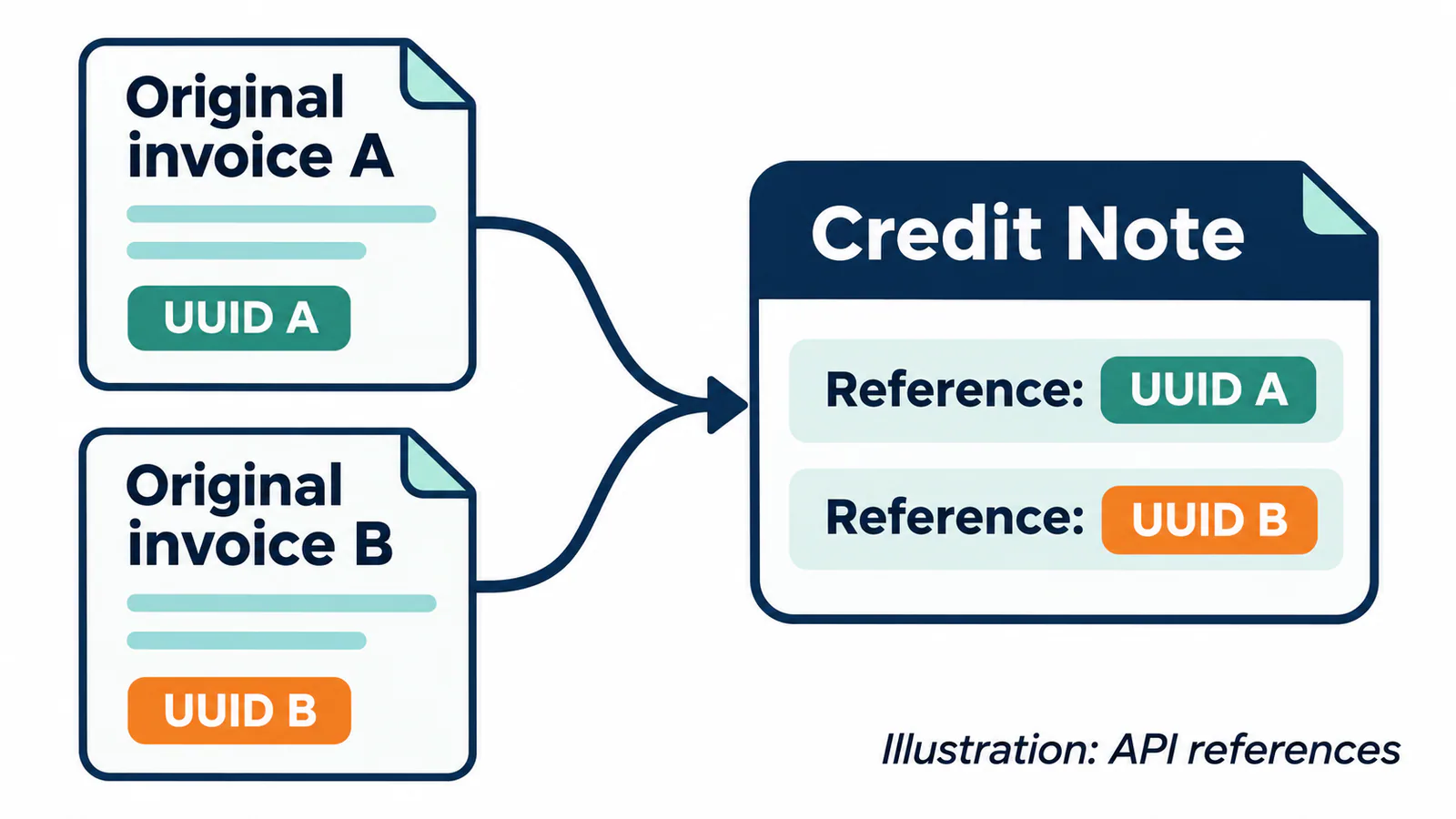
An internal invoice number helps the team find its records. The original e-Invoice UUID is the IRBM identifier returned for the validated document. An IRBM briefing says the affected original’s UUID belongs in the Original e-Invoice Reference Number field of the adjustment document.
For each original, prepare its internal number, UUID, reason and amount to be adjusted. Check whether it was an ordinary or a self-billed invoice before choosing the adjustment path. This is a practical handover list, not a prescribed IRBM form.
XML and JSON use different reference structures
The SDK FAQ describes multiple references for API submissions:
- In XML, add another
BillingReferencefor the second original. Do not put the second reference under the sameInvoiceDocumentReference. - In JSON, add another
InvoiceDocumentReferencefor the second original.
Ask your developer or software provider to check the current SDK and the actual document structure. The FAQ does not establish that multiple UUIDs can be pasted into a single Portal field, or that every third-party system supports the same interface.
Reconcile the amounts before submission
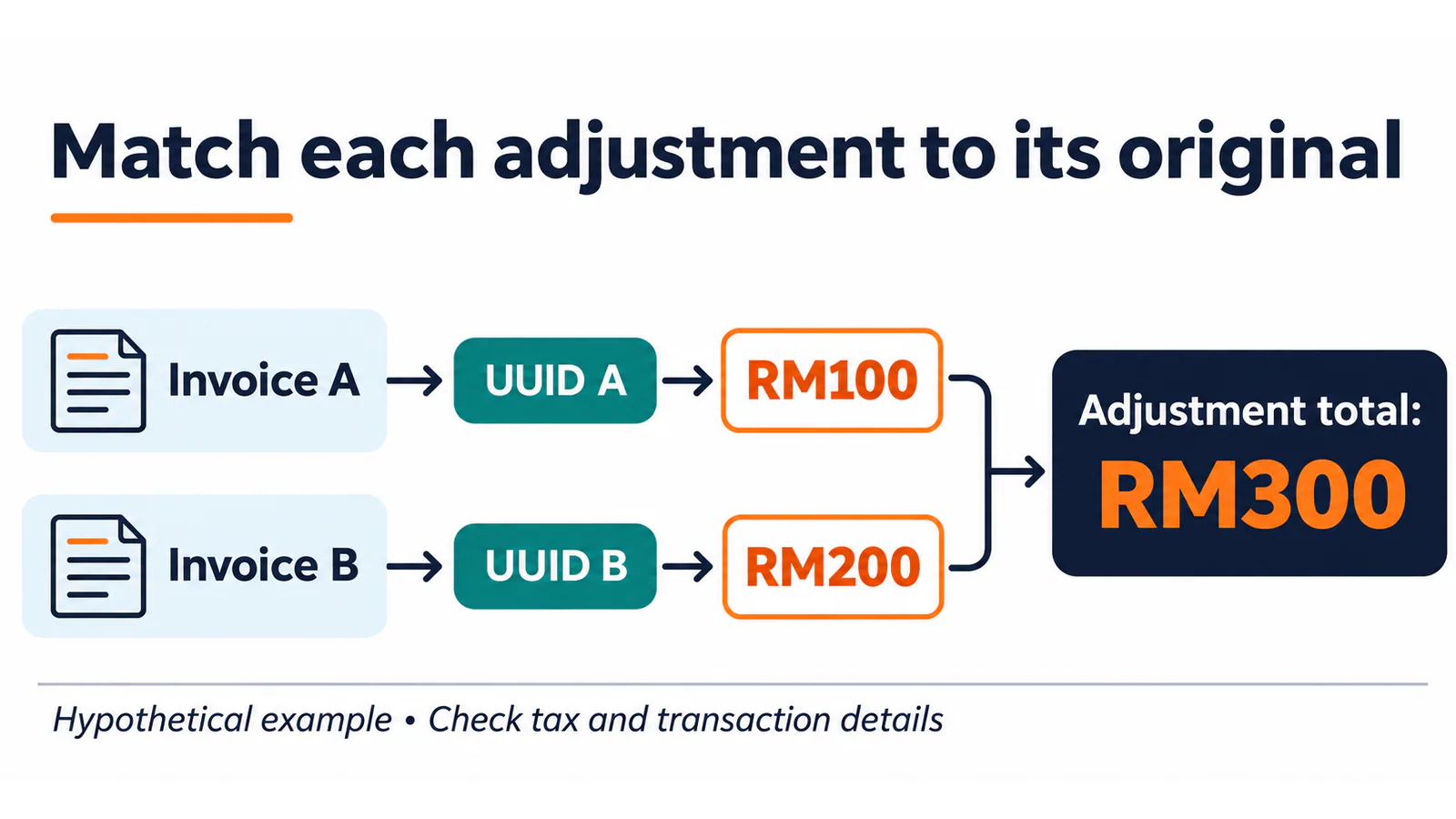
Suppose an agreed adjustment covers RM100 on one original and RM200 on another. An internal schedule can show each invoice, its UUID and the corresponding amount, then reconcile the RM300 total. This is a hypothetical handover example, not an approved tax calculation or a prescribed allocation method.
The reference list and amount schedule serve different purposes. A UUID identifies the original document; a separate internal record can explain why and how much was adjusted against it. This is a practical interpretation of the record trail, not an additional SDK field requirement.
Check the counterparties, original records and supporting documents before submission. After validation, retain the new document’s UUID with the originals and reconciliation. Ask your accountant or provider about tax, refunds, mixed transactions or the appropriateness of combining documents.
Related resources
Share
Keep exploring