MySignalForge
Refinance Home Loan Malaysia: Will Lower Payments Cost More?
Lower refinance payments but a longer loan? Compare switching fees, remaining repayments and a worked break-even example. Check the full cost before switching.
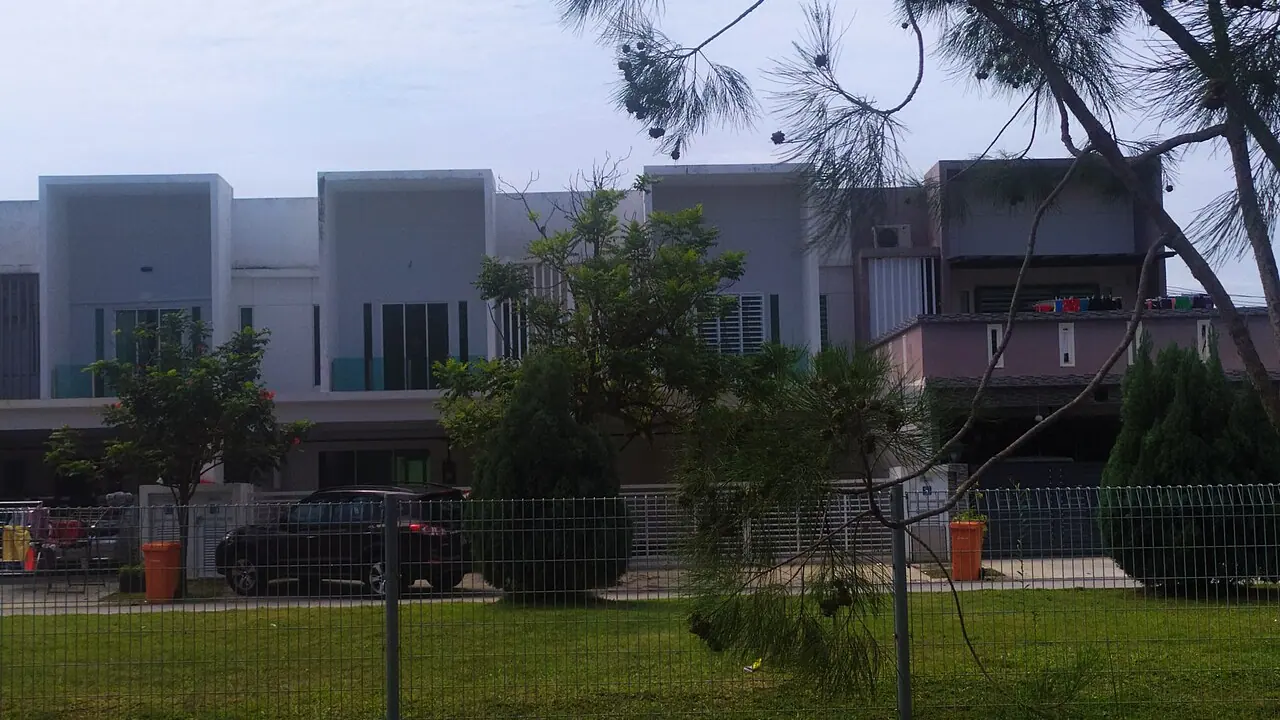
 Condominium in North Kiara, Kuala Lumpur. Resized, cropped and converted to WebP.Photo by Pradana Aumars · Wikimedia Commons · CC BY-SA 4.0

Share
On this page7 sections
To assess whether to refinance a home loan in Malaysia, compare the existing loan’s remaining cost with the new financing’s repayments and switching costs. Keep the amount and remaining term comparable before treating a lower rate or monthly payment as a saving.
Refinancing replaces the existing facility with new financing. Maybank’s refinancing guide describes moving a home loan from another bank and distinguishes refinancing the remaining balance from taking additional cash out. This article examines that decision, rather than ranking today’s mortgage offers.
Start with a settlement amount and a clear purpose
Ask your current lender for a dated redemption or settlement figure and its validity period. Also obtain the remaining payment schedule, current rate basis and conditions for early settlement. The principal shown on an older statement may not be the full amount needed to complete the switch.
Write down why you are refinancing. Reducing future cost, lowering current monthly commitments and borrowing extra cash are different goals. A new loan may help one while moving another in the opposite direction.
| Purpose | Compare first | Question that changes the answer |
|---|---|---|
| Reduce borrowing cost | Same balance and remaining term, plus fees | Do savings remain after switching costs? |
| Lower the monthly payment | New term and total repayment | How much longer will you be paying? |
| Release cash | Additional borrowing and net cash received | What does that extra cash cost over its actual term? |
| Change product flexibility | Contractual features and charges | Will the way you use the account justify the conditions? |
The home-loan rate guide explains fixed versus floating rates and quote comparisons. Here, start with the balance you still owe rather than the home’s original purchase price.
Compare the same remaining term before extending it
The following is a hypothetical fixed-rate illustration, not current bank pricing. Assume RM300,000 remains to be financed, no cash is taken out, and each rate stays unchanged. Fees are initially excluded so the term effect is visible.
| Scenario | Assumed annual reducing-balance rate | Remaining / new term | Monthly payment | Future loan repayments |
|---|---|---|---|---|
| Keep the existing loan | 4.5% | 20 years | RM1,897.95 | RM455,507.55 |
| Refinance for the same term | 4.0% | 20 years | RM1,817.94 | RM436,305.84 |
| Refinance and extend the term | 4.0% | 30 years | RM1,432.25 | RM515,608.52 |
The same-term illustration reduces scheduled repayments by RM19,201.71 before fees. Extending to 30 years instead reduces the monthly figure by about RM465.70 but increases future scheduled repayments by RM60,100.97 compared with keeping the illustrated old loan.
My reading of this comparison is that the lower-rate decision and the longer-term decision should be reviewed separately. Combining them in one monthly-payment headline makes it hard to see which change produced the apparent improvement. That is a calculation-based budgeting judgment, not a rule that refinancing is always beneficial or harmful.
Actual floating rates, the disbursement date, financed charges and the lender’s repayment structure can change these numbers. Totals above use unrounded payment calculations before rounding the final result; multiplying the displayed two-decimal instalment can differ slightly.
Add the full switching cost
Maybank’s refinancing guidance tells borrowers to check lock-in conditions and costs such as legal, valuation, disbursement and stamp-duty charges. It also asks borrowers to clarify whether fees are paid upfront or added to financing. Obtain itemised quotations for the actual transaction instead of treating a website’s generic percentage as your bill.
| Cost or condition | Evidence to request |
|---|---|
| Old-loan settlement and any lock-in charge | Existing agreement and lender’s dated settlement figure |
| New legal, valuation and documentation charges | Itemised professional and lender quotations |
| Insurance or takaful changes | Actual requirements, premium/contribution and treatment of existing cover |
| Fees financed into the new loan | New principal and repayment schedule including those fees |
| Package conditions or later clawbacks | Current offer, disclosure and relevant promotional terms |
A “zero moving cost” description still needs its actual conditions checked. Record who initially pays each cost and whether another contractual condition changes the outcome. Do not deduct a promotional saving that has not been confirmed for your offer.
For the document-cost line, see the loan-agreement stamp-duty guide. Its conditional examples do not decide whether a refinancing exemption or remission applies to your instrument; obtain that confirmation with the cost quotation.
Use break-even as a screening calculation
For a simple upfront-cost comparison, divide switching costs by a reasonably comparable monthly saving. Suppose the same-term illustration above incurs RM6,000 of upfront switching costs. Using the displayed RM80.01 monthly difference gives approximately 75 months to recover that cash outlay.
This is a rough cash-flow break-even, not a complete investment calculation. It ignores timing value and assumes the illustrated saving continues. The result becomes unreliable if rates change, the term changes, fees are financed or you sell or settle earlier. For a planned sale, compare the balances and settlement costs at that sale date too.
If the proposal uses 30 years instead of the old 20, dividing costs by the much larger monthly reduction conceals the additional ten years. Return to the full schedules before using a short “payback” claim to justify the switch.
Keep cash-out borrowing visible
An offer that refinances RM300,000 and advances extra cash is a different borrowing amount. Separate the old-loan redemption, extra amount, deductions and net cash you receive. Ask how each part is priced and scheduled.
Maybank’s mortgage product disclosure lists refinancing and top-up purposes and explains the product’s terms and risks. It is a provider document, not confirmation that your proposed cash-out amount or term will be approved. Use the actual offer for your own facility.
If the extra money is intended to settle other debts, also read the debt-consolidation guide. Paying off a short-term obligation with a longer housing commitment needs a total-cost and security comparison, not just fewer monthly bills.
Separate extra borrowing from access to your own prepayments
Before refinancing to obtain cash, establish whether the proposal is new borrowing or access to eligible excess payments already made into your current facility. Maybank’s Flexi FAQ, checked on 26 October 2026, describes withdrawal of excess payments and separately lists refinancing, redraw or top-up purposes. The exact agreement and available limit still determine what you can access; a feature name does not establish an approved cash amount.
Ask the existing bank for the current balance, available excess-payment withdrawal and dated redemption figure, then ask the new bank to separate redemption, new borrowing, financed costs and net cash released. Reconcile how any existing credit has already been treated so it is not deducted twice. Compare access costs and the future borrowing balance as well as the headline rate. The home-loan guide’s flexi checks cover account and channel conditions; they are not a full flexi simulator or a best-refinance product ranking.
Run the scenario, then obtain the lender’s schedule
In the home loan calculator, you can use the proposed financed amount as the property-price input and set down payment to zero for a balance-only repayment illustration. Use the remaining term for the first comparison. Enter a new longer term only as a separate scenario.
Ignore the tool’s purchase-outlay label when using this balance-only setup: it is not calculating the actual property’s value or refinance transaction costs. The tool assumes a constant rate and excludes fees. It cannot replace a redemption statement, determine cash-out eligibility or model your bank’s future repricing.
Before proceeding, place the old settlement figure, new offer, fee quotations and both repayment schedules together. If repayments are already difficult, contact the current lender about available assistance as well; a proposed refinance remains subject to approval and may not be the immediate solution. Return to the loan overview for the wider borrowing comparison.
Share
Keep exploring