MySignalForge
Home Loan Rates Malaysia: Lower Rate, Lower Total Cost?
Two home loans show similar rates but different costs? Check fees, terms and higher-rate repayments with our linked calculator. Compare your quotes before signing.
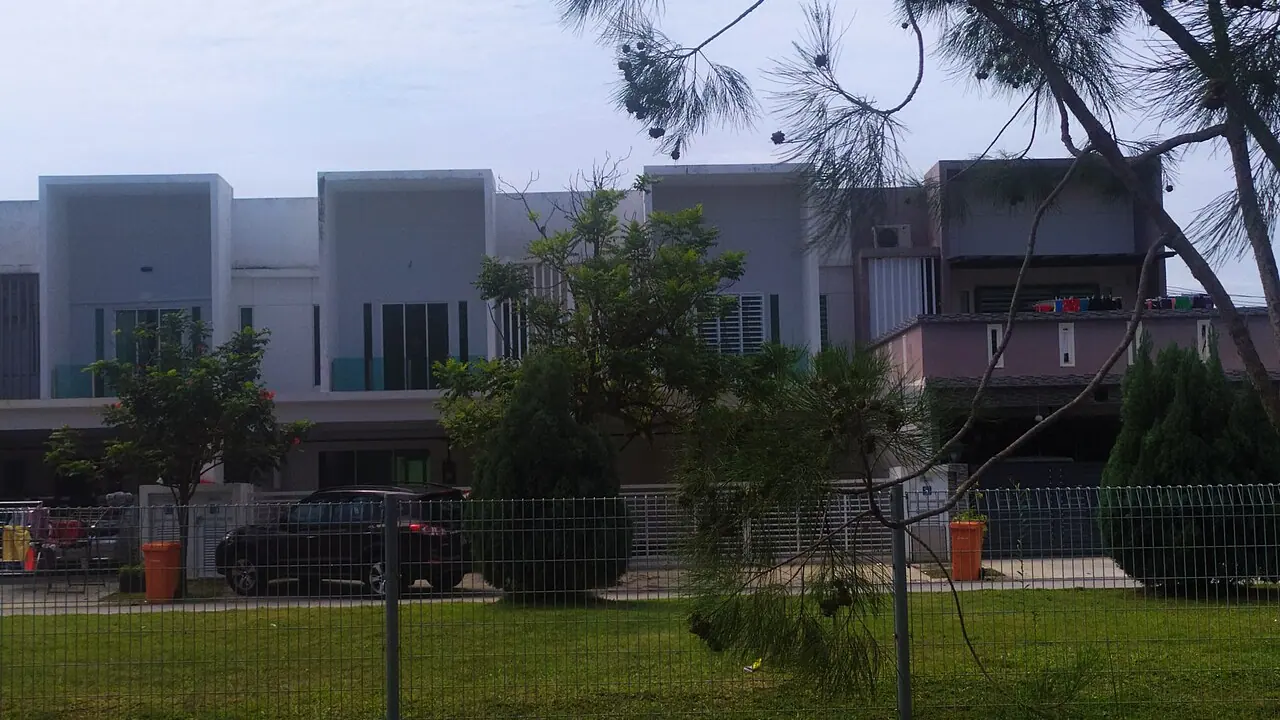 Terrace houses in Bandar Sri Sendayan, photographed in 2024. Resized, cropped and converted to WebP.Photo by AyyanD · Wikimedia Commons · CC BY-SA 4.0

Share
On this page8 sections
Two housing-loan offers can show close interest rates and still lead to different costs. The first rate may be floating, the fee lists may differ, and the larger monthly payment may begin after a rate change. The useful question is not simply “which rate is lower?” It is “what would I pay under the terms of this offer, and what could change?”
Use the home loan calculator to estimate a payment at a rate you enter. It assumes equal monthly payments and an unchanged rate across the whole term. That makes it useful for a like-for-like starting scenario, not a forecast of future policy decisions or your bank’s actual schedule. This guide intentionally does not rank banks by a rate scraped on one date.
Already repaying a mortgage? The home-refinancing guide compares the old loan’s remaining term and settlement amount with a new offer, including switching costs and a simple break-even illustration.
If you have not chosen a property, start with the home-loan affordability calculator. It works backwards from take-home income, existing debts, living costs and a savings buffer to an illustrative loan amount. This personal budget check is separate from a lender’s eligibility assessment.
1. Is the rate fixed or floating?
A fixed-rate offer and a floating-rate offer need different risk checks. Under a floating loan, a change in the reference rate may affect the amount you pay. Bank Negara Malaysia’s monetary-policy FAQ explains that floating housing-loan payments can change as rates move, and that borrowers should receive notice of repayment changes from their banks.
Ask what reference rate applies, what spread the bank adds, when changes flow into your instalment or tenure, and how you will be notified. The annual rate entered in our calculator stays fixed until you change it. The tool’s “one percentage point higher” result is a stress scenario, not a prediction.
2. Are you comparing the same financed amount?
Subtract the down payment from the property price before comparing loan payments. A RM500,000 property with RM50,000 paid upfront leaves RM450,000 for the simple financed-amount calculation. If another offer assumes a different deposit or financed amount, comparing just its monthly payment is misleading.
The calculator displays both the financed amount and the estimated interest. Its “property outlay with deposit” adds the deposit back, but it still excludes stamp duty, legal costs, valuation, insurance or takaful and any other transaction charge. Gather those separately from your actual documents.
The loan-agreement stamp-duty guide shows the common RM5-per-RM1,000 calculation and keeps it separate from property-transfer duty and legal costs. For a shoplot or business premises, use the commercial-property rate guide to check the applicant and facility rather than importing residential-product terms.
How loan-to-value changes the cash you need
Loan-to-value (LTV) expresses the relevant loan amount as a percentage of the property value used for that comparison. Check both numbers before using the percentage. The purchase price, the lender’s accepted valuation and a total facility that includes financed expenses may be different amounts.
Maybank’s MaxiHome Flexi page, checked on 26 October 2026, advertises a financing margin up to 90%. Its linked Flexi FAQ describes the purchase price or open-market value, whichever is lower, when explaining the customer’s contribution, and separately discusses financing related expenses subject to assessment. This is one product’s published information, not a universal 90% entitlement.
Hypothetical valuation comparison: keep the RM500,000 purchase price, but suppose the lender accepts RM450,000 as the financing base and approves 90% of that amount. Purchase financing would be RM405,000, leaving RM95,000 of the price to fund yourself. That is RM45,000 more cash than the RM50,000 deposit in the earlier simple example, before separate purchase costs. The values and approval are assumptions, not a property valuation or bank offer.
Ask for the accepted value, purchase-financing amount, any separately financed expenses and cash contribution in writing. The affordability calculator tests a household budget; it does not check a financing margin. A monthly payment that fits that budget does not establish that the bank will fund the purchase-price gap.
Does a first home qualify for 100% financing?
First-time ownership alone does not establish eligibility. A specific route may offer a higher margin with its own applicant, property and financing conditions. Maybank’s SJKP and SJKP MADANI page, checked on 26 October 2026, publishes these separate packages:
| Maybank route | Published property limit | Published financing composition and overall cap |
|---|---|---|
| SJKP | Price/value up to RM500,000 | Up to 100% for the property plus up to 10% for specified related expenses; total financing capped at RM500,000 |
| SJKP MADANI | Price/value up to RM300,000 | Up to 100% for the property plus up to 20% for specified expenses including renovation/furnishing; total financing capped at RM360,000 |
For example, the page expressly says an RM500,000 property financed at the RM500,000 SJKP maximum has no room to capitalise related expenses. The extra percentage is not an unrestricted cash allowance and does not remove the overall cap.
The listed applicant conditions include Malaysian citizenship, age 18 or above, first-time buyers for all named SPA parties, and monthly income no higher than RM11,000 per named SPA party. The property must be owner-occupied; the page also sets credit-payment and other financing conditions. Check the complete current list with the branch for your own parties and property. This is a provider-specific route to investigate, not confirmation that you qualify or that every first-home loan includes these benefits. Keep a separate cash budget for any amount or expense the final offer does not finance.
3. What is the payment at a higher-rate scenario?
An illustrative RM450,000 balance over 30 years at an unchanged 4% annual reducing-balance rate produces a payment of about RM2,148.37 a month. This is not a current Malaysian bank rate. Enter 5% with the same principal and full term and the estimate rises. The difference tells you how exposed your budget might be to a rate move under a simplified scenario.
An actual floating-rate change normally happens partway through repayment, when the outstanding balance and remaining term differ from the original input. For that reason, the simple +1-point result should not be presented as your bank’s next instalment. Use the lender’s notice or ask for its recalculation if your rate actually changes.
4. What do fees and conditions add?
Rate comparisons should include the terms around the rate. Ask about compulsory charges, insurance or takaful requirements, any lock-in or early-settlement condition, extra-payment flexibility, and the full purchase costs outside the loan. Read the lender’s current PDS and offer instead of relying on an advertisement’s headline percentage.
BNM’s product-transparency policy notice describes enhanced disclosures intended to help customers compare financial products. The practical step for a borrower is to obtain the actual PDS for each offer and note its issue date and conditions.
What should you check in a semi-flexi or full-flexi offer?
The label alone does not tell you how much money remains accessible or how interest savings are calculated. Ask how extra payments are recorded, what balance reduces charges, and how you can withdraw eligible excess payments. Keep the contractual monthly payment separate from money you may choose to add.
Two current product examples show why the account rules matter. Maybank MaxiHome Flexi integrates loan and deposit accounts, states that deposits reduce the outstanding principal, calculates interest daily and permits withdrawal of excess payments without an extra withdrawal charge. Its FAQ also describes drawing-limit reduction programmes. Obtain the programme and available limit for your offer rather than assuming a normal equal-instalment schedule reproduces it.
CIMB HomeFlexi Smart describes extra deposits reducing interest and access to excess prepayments through OCTO or Clicks. Its conventional property-loan fee table, checked on 26 October 2026, lists no redraw charge through Clicks/OCTO and RM25 per transaction through a branch/over-the-counter/contact centre, with applicable taxes to check. The table lists HomeFlexi and HomeFlexi Smart separately; do not transfer the monthly charges of one named product to the other. These examples do not establish a universal definition or fee for every semi-flexi or full-flexi loan.
| Before putting spare cash into the account | Obtain an answer for the exact facility |
|---|---|
| How does an extra payment reduce interest? | Eligible balance, effective date, daily calculation and any offset limit |
| Can the money be taken back out? | Available redraw amount, minimum, channel, timing and restrictions |
| What does access cost? | Withdrawal charges, account fees, taxes and package-specific conditions |
| What payment remains due? | Required instalment, drawing-limit changes and treatment after a withdrawal |
Suppose you put an extra RM20,000 into a qualifying account and later withdraw part of it. The balance available to reduce charges can change with that withdrawal. This is a hypothetical cash-use example, not a quantified saving. The ordinary repayment calculator does not track dated deposits or withdrawals. Use the lender’s account terms and schedule for that comparison. If you are switching lenders for these features, read the refinancing checks.
5. What happens if the payment becomes difficult?
Before signing, fit the proposed payment around other fixed commitments and routine housing costs, not just the amount a lender might approve. Leave room for maintenance and a less favourable rate scenario if the product is floating. If a current payment is already difficult, BNM advises contacting the bank or AKPK early to ask about available help rather than waiting for arrears to build.
For a useful comparison, write each lender’s financed amount, rate basis, monthly payment, total scheduled repayment, charges and adjustment terms in one sheet. Then use our home-loan calculator to test identical assumptions, and return to the Malaysia loans guide if you are still choosing the type of borrowing that fits your purpose.
Share
Keep exploring