MySignalForge
Small Business Loans Malaysia: Can Cash Flow Cover Repayments?
Need stock or equipment before customers pay? Compare SME funding, cash-flow timing, documents and full loan costs. Use the five questions before borrowing.
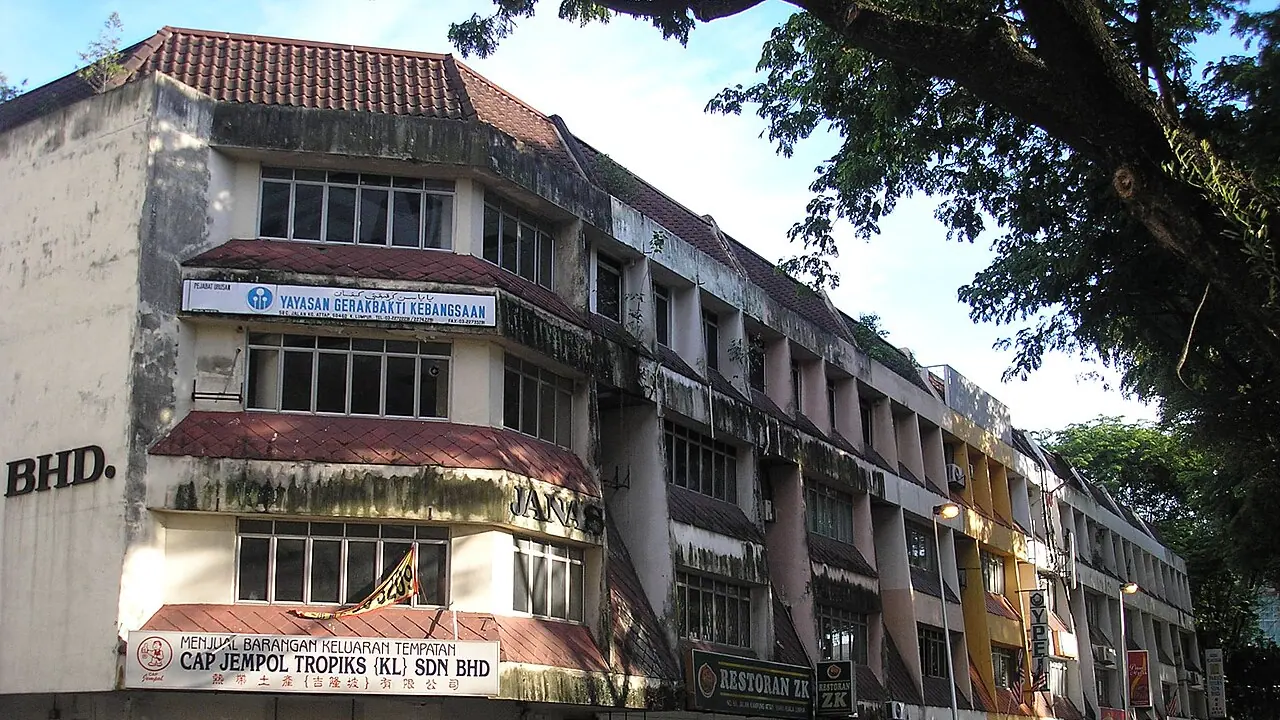 Shopoffices in central Kuala Lumpur. Resized, cropped and converted to WebP.Photo by Two hundred percent · Wikimedia Commons · CC BY-SA 3.0

Share
On this page10 sections
A business can be profitable on paper and still struggle with a loan payment that falls due before customers pay their invoices. That timing question is why a small-business loan should start with the job the money needs to do, rather than a list of lenders ranked by advertised rates.
This guide helps a Malaysian owner prepare a comparison. It is not a list of guaranteed approvals. Bank Negara Malaysia’s microfinance page describes Skim Pembiayaan Mikro and participating institutions, with product information that should be checked again against each institution’s current terms. The wider Malaysia loan guide explains how business borrowing differs from car, housing and personal loans.
1. What exactly will the money buy?
Separate working capital from a longer-lived purchase. Stock, payroll during a short cash gap, equipment and a new outlet all have different cash-return patterns. Record the amount required, when it must be paid, and when the financed activity is likely to generate cash. A loan that is affordable in total may still be poorly timed for the activity it funds.
If the purchase is a shoplot, office or industrial premises, the commercial-property financing guide separates borrower type, term facilities, overdrafts and property costs. It is a different comparison from an unsecured working-capital request.
BNM’s microfinance page lists examples of working-capital and capital-expenditure purposes across participating products. That does not mean every facility covers every purpose. Check each lender’s eligibility, permitted use, amount and tenure in the current product information.
2. When will cash arrive for each instalment?
Build a simple monthly timeline: opening cash, expected customer receipts, fixed expenses, tax and other obligations, proposed loan payment, and closing cash. If invoices are routinely paid 60 days after delivery, a repayment that starts immediately might strain cash before the financed work pays back. Test a slower-sales month as well as an average month.
This is a planning exercise, not a forecast of approval. Your customer-payment timing and margins come from your own records; an online calculator cannot know them. A clear cash-flow timeline also makes it easier to explain the borrowing purpose to a potential lender.
3. What is the full financing cost?
Ask for the amount disbursed, periodic repayment, total repayment, financing-rate basis, fees, security or guarantee requirements, and early-settlement terms. Business products may use different structures. A single monthly-payment figure is not enough to compare them.
BNM’s microfinance page gives participating institutions, product purposes and example terms, including effective and flat-rate presentations. The page’s product details may change. Use it to find a potential route, then confirm the current offer and disclosure directly with the provider before publishing or relying on a comparison.
A published microloan rate is not an SME-wide rate
BSN Micro Madani Mula Niaga, checked on 26 October 2026, publishes a 3.50%–4.00% annual flat rate for that named conventional product. This is not a market-wide business-loan rate, an effective annual rate or a quotation for your company. The MEF brochure, by comparison, leaves the financing rate to the participating institution; a government-supported framework does not establish a single rate for every applicant.
Hypothetical flat-rate calculation: suppose RM15,000 were financed over three years, with equal monthly payments and no fees or other adjustments. Using the endpoints of BSN’s published range gives:
| Assumed annual flat rate | Interest over three years | Principal plus interest | Monthly illustration over 36 months |
|---|---|---|---|
| 3.50% | RM1,575 | RM16,575 | RM460.42 |
| 4.00% | RM1,800 | RM16,800 | RM466.67 |
Interest here is RM15,000 × annual flat rate × three years. Displayed monthly amounts are rounded; the bank’s actual schedule, final instalment, deductions and charges must be obtained separately. These are calculations using assumed approved terms, not loan offers. Do not enter a flat percentage into a reducing-balance calculator and treat the result as this product’s repayment.
4. Which records support the application?
The exact documents depend on the product and institution. Prepare the records that explain the request: registration or licence where relevant, bank statements, sales and expense history, existing debt, the asset quotation or stock plan, and a repayment forecast. BNM’s microfinance listing shows examples of business-registration and income or bank-statement documents for participating products; it is not a universal mandatory checklist for every lender.
Do not alter a sales scenario to make an application look stronger. A repayment plan based on actual collection periods is more useful to the owner than a perfect projection that cannot be met.
Does an SSM registration certificate qualify the business for a loan?
A search for an “SSM loan” still needs an identified lender and product. Registration is one piece of evidence; it does not show sales, operating history or repayment capacity. For example, BSN’s Mula Niaga page, checked on 26 October 2026, requires the applicable registration or licence and other records:
| Item in this BSN product’s checklist | What to prepare |
|---|---|
| Business registration | Valid CCM/SSM registration, local-authority business licence, or the stated professional registration/practising evidence for the relevant route |
| Banking history | Latest six months of bank-account statements |
| Applicant and premises records | Identity copies for the relevant proprietor, partners or directors, plus the listed premises utility bills |
| Other evidence | Any additional supporting records requested by the bank |
The page also states Malaysian ownership and at least six months in operation, depending on business category and type. Match the business and applicant to that route before uploading records. This checklist belongs to one named product; it is not a universal SSM-based loan entitlement or a list every Malaysian bank uses.
5. Is the product suitable for this business stage?
Compare the lender’s eligible business type, time in operation, financing purpose, amount, term and repayment pattern with your records. BNM describes Skim Pembiayaan Mikro as a route for microenterprises and self-employed people through participating institutions; its headline scheme description mentions financing up to RM100,000, subject to provider and scheme conditions. An SME needing a much larger long-term facility should not assume that this one scheme covers the need.
SME loans for a new business in Malaysia
Start with the evidence you already have rather than assuming an established-business product will accept a forecast in place of trading history. Separate money needed before the first sale from money needed to fulfil orders already received. Those requests can involve the same amount but leave very different evidence for a provider to assess.
Prepare a short funding brief with the purchase or expense, amount, payment date, your own contribution and the expected source of repayment. Attach existing quotations, orders and available account records where relevant. These are preparation suggestions, not a universal lender checklist. Ask each provider whether it accepts the business’s age, registration status, purpose and available records before preparing a full application.
If the business has not started trading, make that clear. Label projected sales as forecasts and keep them separate from confirmed orders and actual receipts. A plan that works only if every forecast sale arrives on time needs a second scenario with delayed receipts before the owner commits to repayments.
One published route for a business already trading
BSN Micro Madani Mula Niaga describes support for newer formal businesses, but requires at least six months of operation, depending on category and type. On 26 October 2026 it lists RM2,000–RM20,000 over one to three years for working capital, capital expenditure and renovation, with Malaysian ownership and the registration/document conditions above. “New entrepreneur” therefore does not establish that a business with no trading history qualifies.
Its page links an online application portal and offers branch/Business Financing Centre routes. The portal was identified from the bank’s own product page; we have not submitted an application, tested an eligibility result or confirmed a decision time. Check the current product and bank instructions before starting. For a business not yet trading, this page has not verified a pre-opening loan that fits; explain that stage honestly and ask providers about a specific suitable route rather than presenting projected receipts as past sales.
Micro business loans: compare the facility with the cash cycle
For a micro business loan in Malaysia, use BNM’s participating-institution list as a starting point, then check the current provider terms. Compare more than the maximum amount available.
For a scheme-specific route, the BNM Micro Enterprises Facility guide explains its published purposes, limits and application through participating institutions. It does not confirm that every provider offers identical terms or accepts every new business.
| Your business needs | Question to ask before applying |
|---|---|
| Stock that sells gradually | When does repayment begin, and can existing cash cover it before the stock sells? |
| Equipment used over several years | Does the repayment period fit the useful life and the income the equipment is expected to support? |
| Funding against a customer order | What happens to the repayment budget if that customer pays late? |
| A smaller amount than the product maximum | Can you borrow only what the purchase and cash buffer require? |
| Irregular or seasonal receipts | What payment schedule applies during a slower month? |
Government-supported SME financing or a grant?
A search for a government SME loan can lead to several kinds of support. Before comparing programmes, establish what the particular offer actually provides: repayable financing, a guarantee supporting a financing application, or grant funding under its own conditions. Do not treat those labels as interchangeable or assume that government support means guaranteed approval.
BNM’s current fund directory provides the starting point for its participating-institution routes. The MEF explanation covers microenterprise financing and distinguishes it from the separate SME Stabilisation Relief Facility; do not transfer one scheme’s purpose or availability dates to another. Confirm the institution’s actual product and current availability before preparing an application.
Use the Malaysia grants and financing guide to find the separate programme explanations. Confirm the programme’s current application status and provider conditions at its official source. Keep any expected grant out of the loan-repayment budget until you know whether it has been approved and when any payment would arrive.
The decision is easier when you can answer two questions side by side: Can the business carry the scheduled payment in a slow month? and Will the financed activity create enough value over the financing term? If the first answer is no, a lower advertised rate alone cannot repair the timing problem. Return to the loan pillar for the cross-loan comparison, or review the car loan calculator only when the actual decision is vehicle financing; it does not model general business cash flow.
If you are also researching business grants and other funding routes, the Malaysia grants and financing guide links to the separate programme guides. Check the conditions of the particular programme before comparing it with a loan offer.
Share
Keep exploring